A pistachio’s quality is set in the orchard, but it can be lost in a matter of hours after picking. This is the journey a nut takes before it reaches your warehouse, and where the important quality decisions are made.
When harvest happens
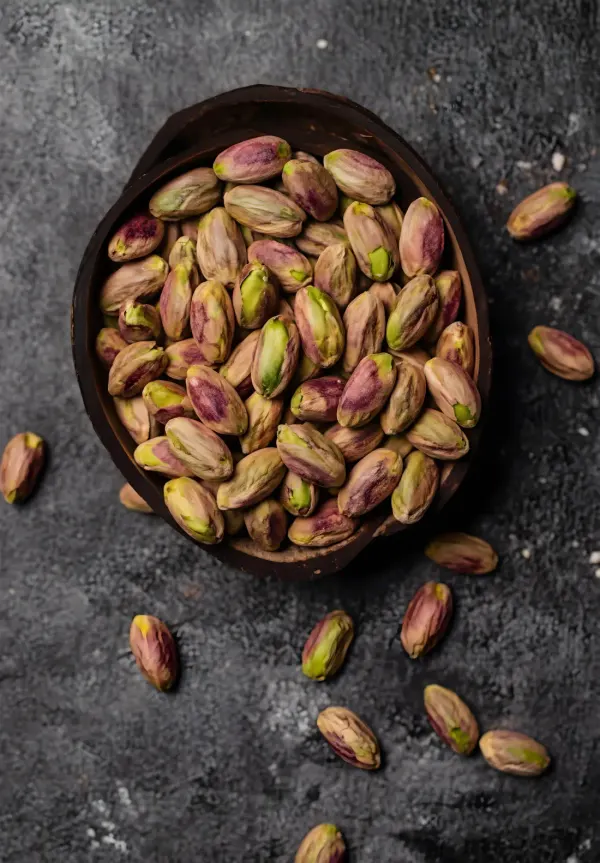
Pistachios grow in grape-like clusters, and botanically each one is a drupe: a soft outer hull around a hard shell, with the kernel inside. In Rafsanjan and the rest of Kerman province, the main harvest runs from late summer into autumn, with most of the picking in September and October. Other growing regions follow a similar window. A separate, much earlier picking in July and August supplies the immature nuts used for green peeled kernels.
- Iran
- Other origins
Typical windows; exact timing shifts with the season and the variety.
Show the data
| Origin | Harvest months |
|---|---|
| Iran, green kernels | Jul–Aug |
| Iran, main crop | Sep–Oct |
| United States | Aug–Oct |
| Türkiye | Aug–Sep |
| Greece | Aug–Sep |
| Australia | Mar–Apr |
Reading the signs of ripeness
- The hull changes from green to a soft, rosy yellow
- It slips away from the shell when pinched
- Nuts start to let go of the cluster easily
Because nuts on the same tree ripen unevenly, harvesting a block usually takes two to three weeks. Nuts whose hulls stay green and cling tightly are often blanks.
Picking: by hand or by machine
Hand harvesting, shaking branches onto tarps or picking clusters, is gentle and selective but slow. Mechanical shakers grip the trunk or branches and vibrate the nuts onto catch frames. Well-tuned shakers are fast and leave many unripe nuts on the tree. Either way, nuts should never sit on bare soil.
The race to the processing line
Once picked, the moist hull starts to deteriorate. Good practice is to get nuts from the tree to the processing line the same day, ideally within hours, because delay is one of the main routes to mould and aflatoxin.
Hulling and washing
The soft outer hull is removed by hulling machines, followed by washing to clear debris and hull residue. Careful machine settings matter: too much force cracks shells and damages kernels.
Flotation: separating full nuts from blanks
The washed nuts go into water tanks. Full, heavy nuts sink, while blanks and underfilled nuts float and are skimmed off. This simple step removes much of the empty weight from the crop.
Drying: from about 30% to under 5%
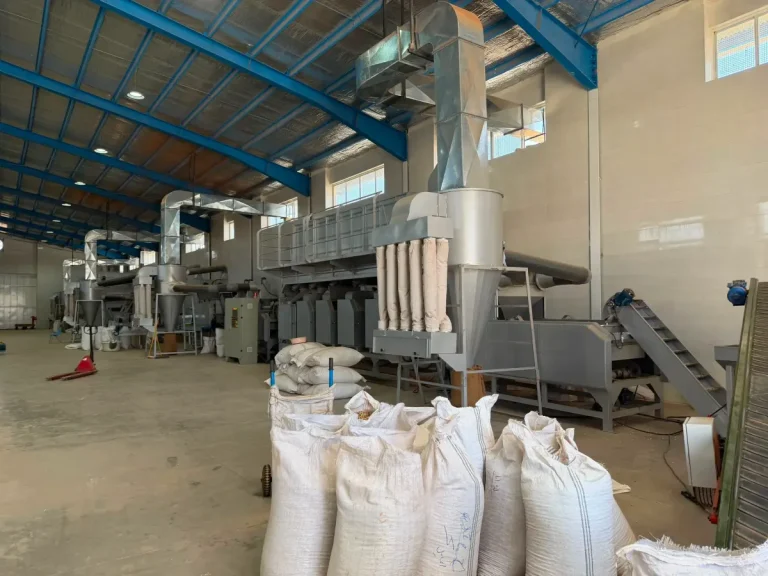
Freshly hulled pistachios hold roughly 25 to 35% moisture. That must come down to below 5% for safe storage. Most processors use two stages: hot-air dryers bring the nuts to around 10%, then cooler air or sun finishes the job gently. Very high temperatures can start to roast the nut, so the finishing stage is kept mild. Warm nuts never go straight into storage.
Typical values; the final target protects against mould during storage.
Show the data
| Stage | Moisture |
|---|---|
| Fresh from the tree | 25–35% |
| After hot-air drying | ≈10% |
| Ready to store | below 5% |
Sorting and grading
Dry nuts are sorted by:
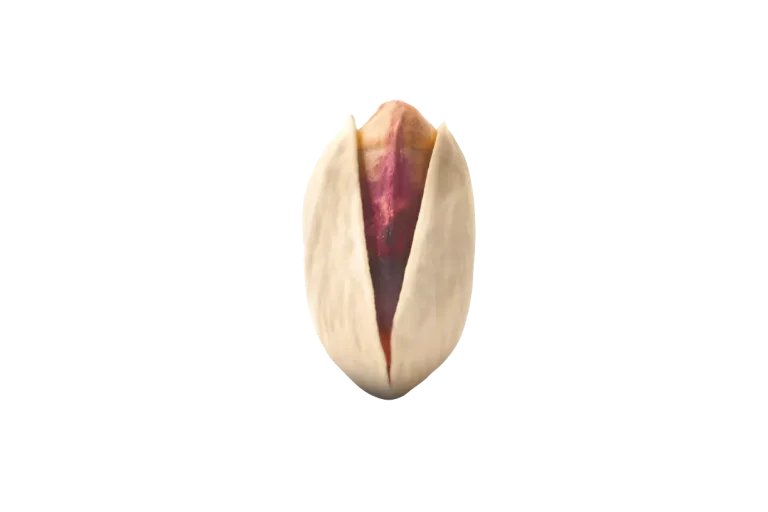
- Shell type: naturally open, closed (sent for cracking into kernels)
- Size, by nuts per ounce
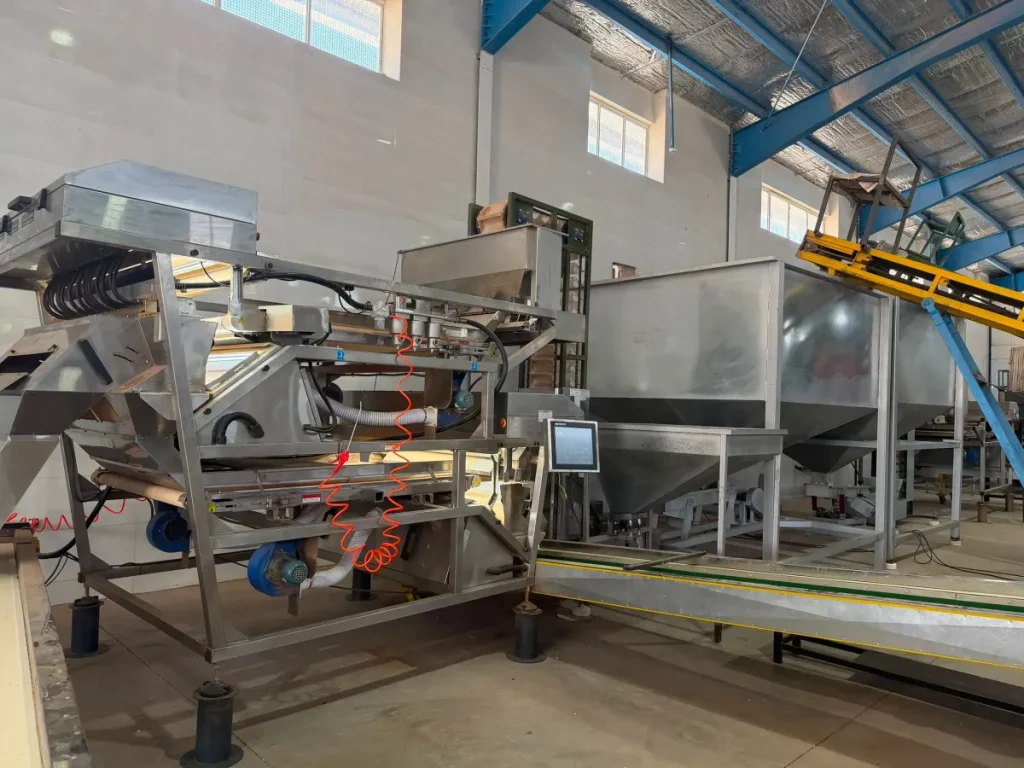
- Defects: stained shells, insect damage, foreign material, using optical sorters and trained hand sorting
Packing and storage
Graded nuts are packed into sealed bags, cartons or vacuum packs and stored cool and dry until shipment. Lab checks for moisture and aflatoxin confirm each lot before it leaves.
How we handle it
At Pure Pistachio, the cracking, sorting and cleaning, and packaging stages all happen in-house in Rafsanjan, with lab testing running alongside. See the details on our Services page or ask us about a processing programme.