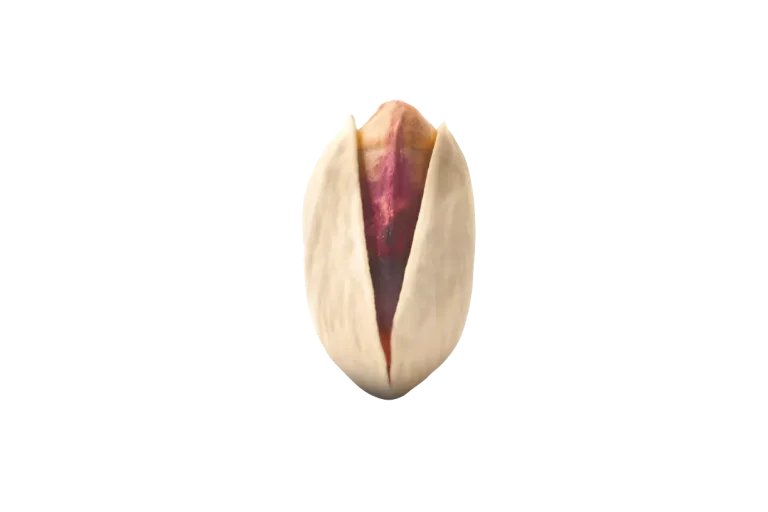
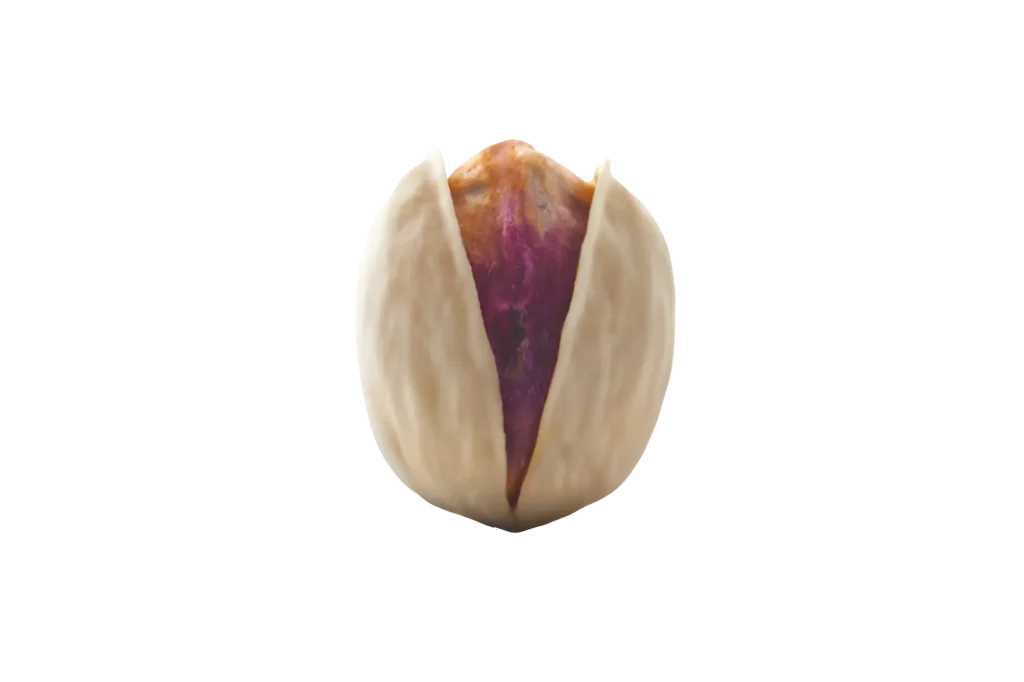
Every pistachio offer comes with a pair of numbers, such as 20–22, 26–28 or 32–34. They look like codes, but the idea behind them is simple, and once you know it you can compare offers from different suppliers at a glance.
Counting nuts in an ounce
Pistachio size is measured by how many nuts it takes to make one ounce (28.35 grams). A grade of 20–22 means that between 20 and 22 in-shell nuts weigh one ounce. Fewer nuts per ounce means each nut is heavier, so a lower number means a bigger pistachio.
The two-number format exists because no harvest is perfectly uniform. Grading machines sort the crop into bands, and each band is sold under its range.
Typical size ranges by variety
Each variety naturally falls into its own part of the scale:
Each bar is one traded size band. A lower count means a bigger nut.
Show the data
| Variety | Size bands (nuts per ounce) |
|---|---|
| Kalleh Ghouchi (Jumbo) | 16–18, 20–22, 22–24, 24–26 |
| Akbari (Super Long) | 18–20, 20–22, 22–24 |
| Ahmad Aghaei (Long) | 26–28, 28–30 |
| Fandoghi (Round) | 28–30, 30–32, 32–34, 34–36 |
Across Iranian production, traded sizes span roughly from 18–20 at the large end to 36–38 at the small end.
Why size changes the price
Larger nuts are scarcer in every harvest, so the biggest bands command the highest prices. Size also changes what the customer sees: in a clear retail bag, a 20–22 Jumbo looks very different from a 32–34 Round, even though both are excellent pistachios. For mixes, bulk bins and further processing, the smaller bands often give better value per kilo.
Uniformity matters as much as the number
A size grade only helps if the lot actually sticks to it. Ask how much tolerance is allowed outside the stated band, and check the sample: a well-graded lot looks even, with few undersized nuts or broken pieces. Size is also only one part of the specification. Shell opening, moisture, closed shells and stained shells all affect what you are really paying for.
How to write a clear order
A complete pistachio request usually names:
- Variety, for example Akbari or Fandoghi
- Size band, for example 28–30
- Shell type: naturally open, mechanically split or closed
- Quality limits: moisture, closed shells, aflatoxin
- Packing: bag size and material
Our In-Shell page lists every size band we supply for each variety. To compare two sizes side by side before you decide, request a sample.