The little gap in a pistachio shell is not just there for convenience. Whether the shell opened by itself, was opened by a machine, or never opened at all says a lot about the nut inside, and it is one of the biggest reasons two similar-looking offers carry different prices.
Naturally open
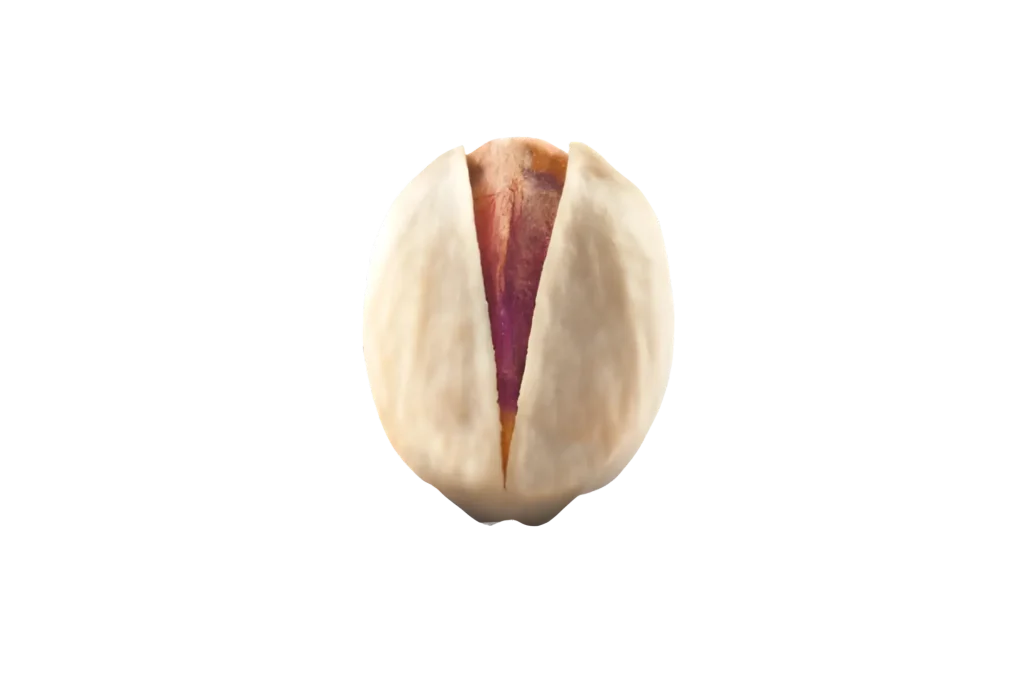
As a healthy pistachio ripens, the kernel grows until it presses the shell apart along its seam. These naturally open nuts are fully developed, with a well-filled kernel that typically makes up a little more than half of the nut’s weight. They are the standard for premium in-shell snacking, because the shell is easy to open by hand and the kernel is mature.
Mechanically split
Some nuts never split on the tree. A machine can force them open, but a nut that stayed closed often did so because its kernel was smaller or less developed. Mechanically split pistachios are therefore usually cheaper, with a lower kernel-to-shell ratio. The split can look less even, with a straighter, sharper edge than the natural opening.
A common problem in the trade is blending: mechanically split nuts mixed into a lot sold as naturally open. A careful look at a sample usually reveals it, and it is worth asking your supplier directly.
Closed shell
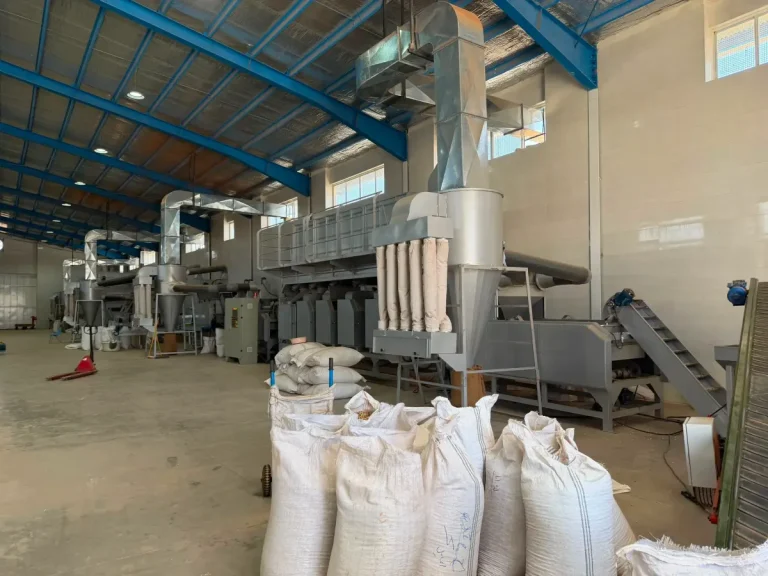
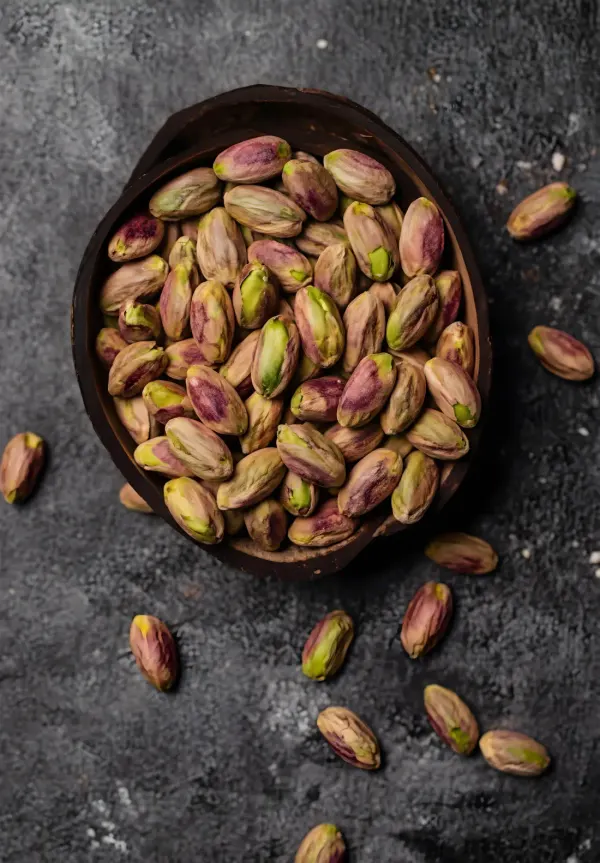
Nuts that remain fully closed are rarely sold as snacks. Instead they go to cracking machines, where rotating stones or rollers break the hard shell and calibrated sieves separate the kernels from the fragments. The kernels are then graded into wholes, halves and pieces. Most regular pistachio kernels on the market start life this way, so closed nuts are an important raw material, not a reject.
Two other things to check
Blanks. Some shells contain no kernel at all. During processing, nuts are floated in water: full nuts sink while blanks and underfilled nuts float and are removed. A good lot has very few blanks left.
Stained or stuck-hull nuts. If the outer hull is not removed cleanly, because the nut was under-ripe, dried too slowly or split too early, patches of hull stick to the shell and stain it. These nuts are separated out and graded down, because they spoil the look of the lot.
What to put in your specification
| Point | Why it matters |
|---|---|
| Shell type (natural / mechanical / closed) | Drives kernel weight and price |
| Maximum closed shells | Closed nuts in an in-shell lot are lost value |
| Maximum blanks | Blanks add weight but no kernel |
| Maximum stained shells | Appearance and grade |
| Moisture | Weight and shelf stability |
Our in-shell pistachios are supplied naturally open with closed shells limited to 5%. See the full specifications on the In-Shell page, or request a sample to check a lot for yourself.